
For too long, the Architecture, Engineering, and Construction (AEC) industry has grappled with a significant pain point: the time-consuming and often repetitive nature of creating proposals. Architects, engineers, and construction professionals are brilliant at designing and building our world, but when it comes to translating that expertise into winning proposals, they often find themselves bogged down in data entry, re-formatting, and version control issues.
This inefficiencies not only drain valuable time and resources but also can compromise the quality and competitiveness of proposals. In an increasingly crowded and sophisticated marketplace, AEC firms need every edge to stand out and win work.
What if there was a better way?

Automation in AEC proposals is no longer a futuristic concept; it's a rapidly growing reality that is revolutionizing the way firms bid for and win projects. By automating repetitive and manual tasks, AEC professionals can:
Save Time: Dramatically reduce the time spent on proposal creation, allowing them to focus on higher-value activities like strategic positioning and proposal strategy.
Increase Winning Potential: Enhance the quality, consistency, and persuasive power of their proposals.
Improve Accuracy and Compliance: Ensure adherence to firm branding, style guidelines, and regulatory requirements.
Boost Team Collaboration: Streamline communication and workflow among proposal team members.
The Current State of AEC Proposal Workflows
AEC proposals are complex documents, often requiring inputs from various disciplines and stakeholders. The traditional manual approach to proposal creation often involves a chaotic mix of:
Data Silos: Resumes, project case studies, and corporate boilerplate materials scattered across different folders and drives.
Manual Data Entry: Copying and pasting information from past proposals and other documents.
Version Control Challenges: Ensuring everyone is working on the most up-to-date version of the proposal and avoiding conflicting edits.
Inconsistent Formatting: Struggling to maintain branding and style consistency across different proposal sections.
The Power of Automation (WorkOrb Core Features)
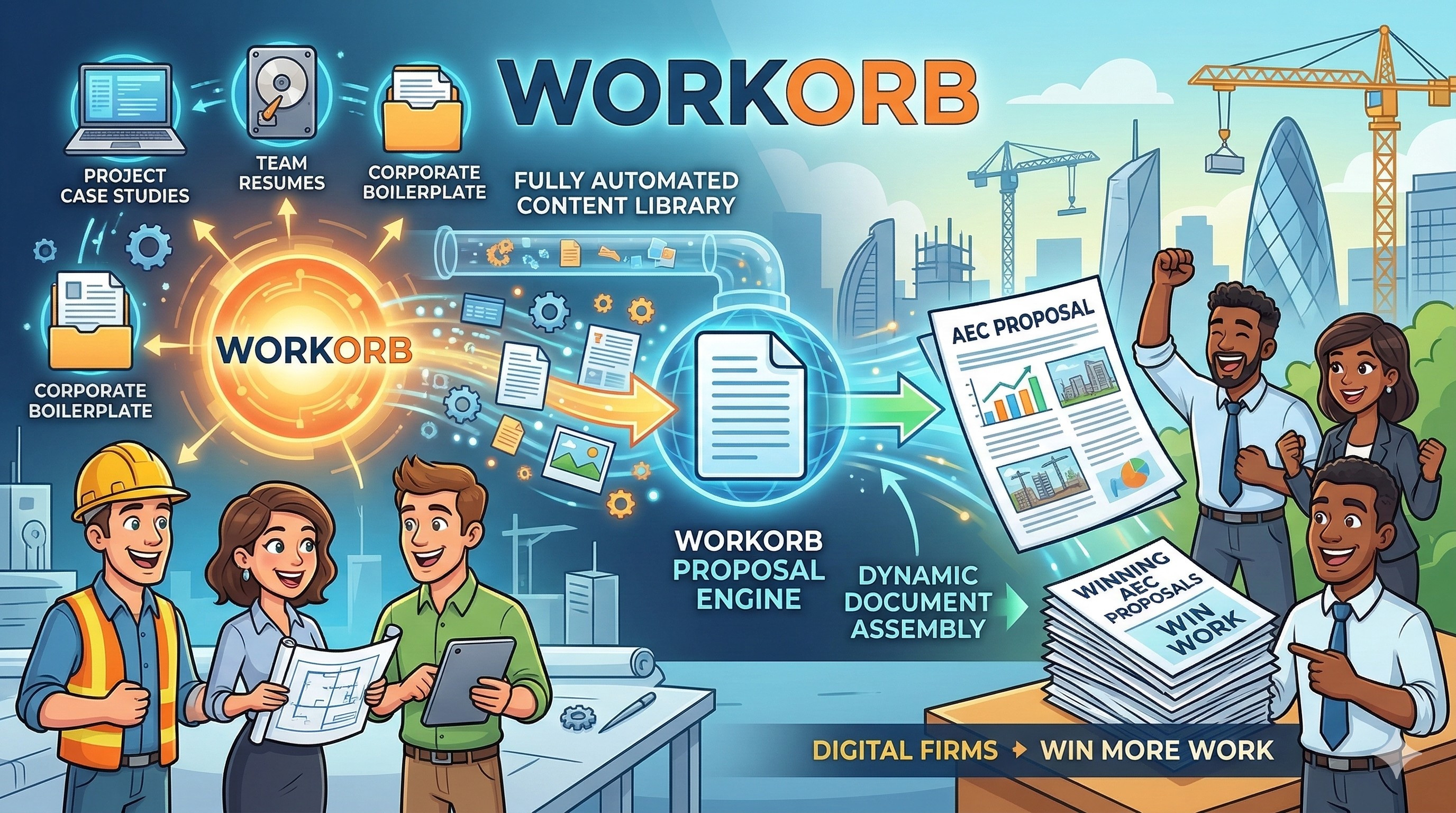
The adoption of automation in AEC proposal workflows—led by platforms like WorkOrb—is gaining traction as firms seek to modernize their processes. To achieve a fully automated content library and assembly process, the following features are essential:
1. Centralized & Intelligent Content Library
WorkOrb acts as a single source of truth, creating a digital repository for storing and managing all reusable proposal content. This includes firm overviews, team resumes, and project experience, eliminating the "Data Silo" problem.
2. Dynamic Document Assembly
This is where the "Full Automation" happens. WorkOrb can automatically populate proposal templates with content from the centralized library based on project-specific requirements, moving beyond simple copy-paste to intelligent document generation.
Content Versioning and Revision History: Track changes to content and maintain a history of revisions, ensuring everyone is working with the latest versions.
Collaboration Tools: Facilitates real-time collaboration among proposal team members, allowing them to review, comment on, and edit content simultaneously.
Template Management: Create and manage customized proposal templates for different project types and clients.


