
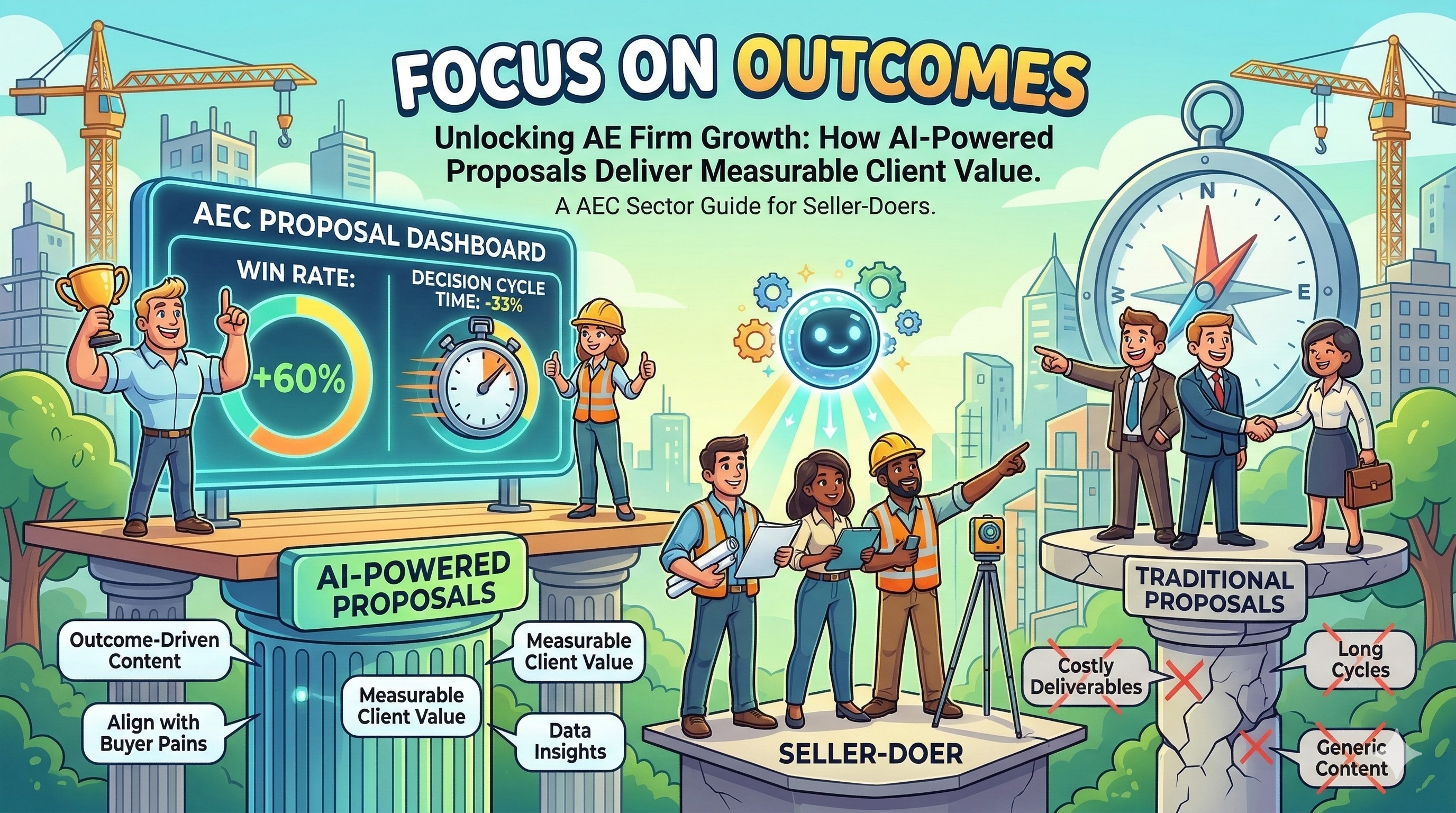
The Architectural, Engineering, and Construction (AEC) sector is facing a pivotal moment. Clients are more demanding, projects are more complex, and competition is fiercer than ever. To thrive in this environment, firms need to shift their focus from mere deliverables to quantifiable outcomes. This is where AI-powered proposals come in, acting as a catalyst for delivering measurable client value and accelerating decision cycles.

Aligning Proposal Content with Buyer Pains
In the traditional proposal development process, a considerable amount of time is spent on non-billable hours, writing from scratch, and focusing heavily on technical specifications and scope of work. While these elements are crucial, they often fail to address the underlying pain points that keep clients up at night. AI can analyze past proposals, industry trends, and client data to help you identify and articulate the value proposition that directly addresses these pain points.
By leveraging AI, you can:
Tailor proposals to individual client needs: AI-powered tools can analyze client data to understand their specific challenges, goals, and priorities. This enables you to create hyper-personalized proposals that resonate on a deeper level.
Quantify the impact of your solutions: Move beyond vague promises and back up your claims with data. AI can help you quantify the cost savings, efficiency gains, and ROI that your solutions will deliver.
Predict future needs: AI can identify emerging trends and anticipate client needs, allowing you to proactively propose solutions that will add value over the long term.
Accelerating Decision Cycles with AI-Powered Insights
The AEC decision-making process is notoriously lengthy and complex, often involving multiple stakeholders with competing interests. AI can streamline this process by providing:
Real-time insights on proposal performance: AI can track how proposals are being received and identify areas for improvement. This allows you to iterate and refine your proposals based on real-time feedback.
Automated scheduling and follow-ups: AI can automate repetitive tasks like scheduling meetings and following up with clients, freeing up your team to focus on high-value activities.
Intelligent pricing and negotiations: AI can analyze market data and competitor pricing to help you optimize your pricing strategies and negotiate more effectively.
A Values-First Framing Guide for Seller-Doers
The shift towards AI-powered proposals requires a cultural shift within AEC firms. This means moving away from a traditional sales approach to a values-first framing where every interaction is focused on creating and communicating value for the client. This includes:
Empathizing with client challenges: Put yourself in your client's shoes and understand their motivations and constraints.
Communicating effectively: Use clear, concise, and compelling language that resonates with your audience.
Building trust and credibility: Demonstrate your expertise and commitment to delivering exceptional results.
Measuring and reporting on outcomes: Track and share the impact of your work to demonstrate the value you've created.
Benchmarking Outcomes: Before and After AI Implementation
To illustrate the impact of AI-powered proposals, let's look at a hypothetical benchmark comparison:
Before AI Implementation:
Win Rate: 25%
Cycle Time: 6 months
Client Satisfaction: Average
After AI Implementation:
Win Rate: 40% (60% increase)
Cycle Time: 4 months (33% decrease)
Client Satisfaction: Excellent
Conclusion
The integration of AI into the proposal development process is a game-changer for AEC firms. By leveraging AI to align proposals with buyer pains and accelerate decision cycles, firms can deliver measurable client value, increase win rates, and drive business growth. Embrace the values-first framing guide and leverage AI as a powerful tool to achieve a focused, outcome-driven approach to client acquisition and retention.


